
REGULATIONS
The South Carolina Department of Environmental Services (SCDES), formerly known as DHEC, regulates all onsite wastewater systems under Regulation 61-56. In Upstate South Carolina—where heavy clay soils are common—following these specific maintenance schedules is critical to avoid system failure.
Residential Septic Recommendations
SCDES emphasizes that homeowners are solely responsible for the upkeep of their systems once a permit is issued.
Pumping Frequency: Standard residential tanks should be pumped every 3 to 5 years. In Upstate counties like Greenville, Spartanburg, or Anderson, the dense clay soil may require pumping every 2 to 3 years to prevent solids from clogging the drain field.
Inspections: Engineered or Advanced Systems should be professionally inspected every 1 to 2 years.
Advanced Systems: If your system has mechanical components like an effluent pump or lift station, it must be inspected at least once a year.
Additives: SCDES does not recommend using septic tank additives (yeast, sugar, or commercial enzymes). Normal household use provides all the bacteria necessary for the system to function.
Prohibited Items: Never flush "flushable" wipes, grease, coffee grounds, or feminine hygiene products. These do not break down and will lead to rapid sludge buildup or blockages.
Commercial Grease Trap Regulations
Commercial facilities, particularly Food Service Establishments (FSEs), must adhere to stricter local and state codes to prevent Fats, Oils, and Grease (FOG) from entering public sewers or septic drain fields.
Sizing Requirements: Per SC Code Regs. 61-56, new food service facilities must have a grease trap with a minimum capacity of 1,000 gallons.
Pumping Frequency: * Outside Interceptors: Generally required to be pumped every 30 to 90 days. Many municipal ordinances (like those in Columbia or Greenville) enforce a 25% Rule: an interceptor must be cleaned before the combined thickness of the floating grease and settled solids exceeds 25% of the tank's total depth.
Inside Traps: Smaller under-sink traps should typically be cleaned weekly or bi-weekly to manage odors and prevent line clogs.
Record Keeping: Businesses are required to maintain a FOG Maintenance Log on-site for inspection by health officials or utility providers.
Licensing Requirements
To stay compliant with South Carolina law, any work performed on your system must be done by an SCDES-licensed professional:
Installers: Must hold a Tier 1, 2, or 3 license depending on the system's complexity.
Pumpers/Haulers: Must be licensed and use vehicles that have passed an SCDES suitability inspection.
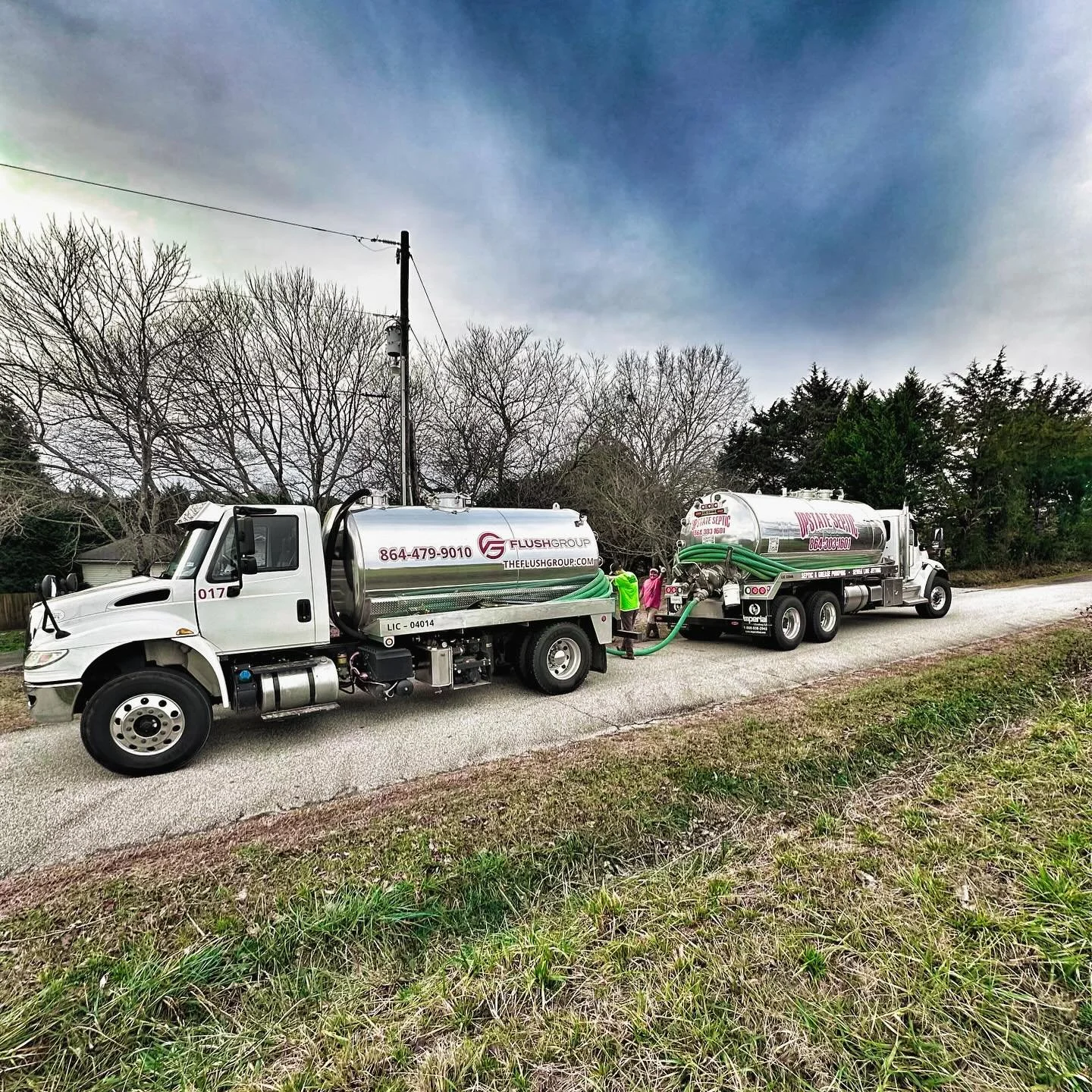
Choosing the right septic company is not just about price. It is about trusting the people who show up at your property, knowing they will diagnose the problem honestly and fix it correctly the first time. At The Flush Group, that is the standard we have held ourselves to for over 40 years. We are fully licensed and insured, we never subcontract our work, and we treat every property like it is our own.